



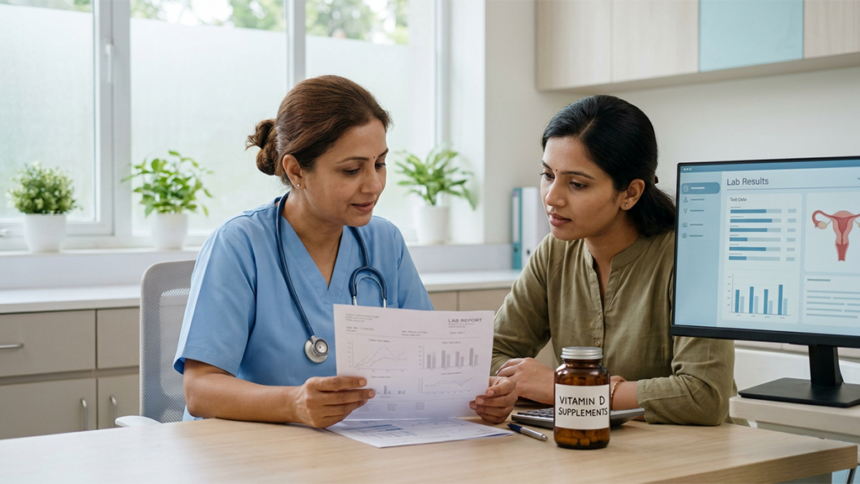
Vitamin D has become one of the most discussed supplements among women trying to conceive. Many women hear that vitamin D may support ovulation, egg quality, implantation, PCOS management, and IVF outcomes. Naturally, this creates a question that feels very personal: if vitamin D is good for fertility, will taking more improve the chances of pregnancy?
- Why Vitamin D Matters for Women Trying to Conceive
- How Too Much Vitamin D Can Affect the Body
- Does Excess Vitamin D Directly Cause Infertility?
- How Doctors Check Whether You Need Vitamin D
- Safe Supplement Use While Trying to Conceive
- Vitamin D, PCOS, and Ovulation: What Women Should Know
- Does Vitamin D Decide Whether You Need IUI or IVF?
- What About Cost and Treatment Planning?
- When Should You Stop Self-Medicating and See a Doctor?
- Final Takeaway
The honest medical answer is no. More vitamin D does not automatically mean better fertility. In fact, taking high doses without testing can be unsafe. Vitamin D is a fat-soluble vitamin, which means the body stores extra amounts rather than flushing them out quickly. When levels become too high, it can disturb calcium balance, affect kidney function, cause uncomfortable symptoms, and create stress on the body at a time when you are trying to prepare for pregnancy.
At ARC Fertility Hospitals, women are encouraged to treat supplements as part of medical care, not as harmless shortcuts. A fertility plan should be based on blood tests, age, ovarian reserve, menstrual history, thyroid status, PCOS symptoms, male partner factors, and the couple’s time trying to conceive. Vitamin D can be important, but it is only one piece of a larger fertility picture.
Why Vitamin D Matters for Women Trying to Conceive
Vitamin D plays a role in bone health, immunity, inflammation control, insulin sensitivity, and hormone-related functions. In fertility care, doctors often assess vitamin D because deficiency is common, especially among women who spend limited time in sunlight, have darker skin tones, follow restrictive diets, have obesity, or live with PCOS.
Low vitamin D levels have been associated with irregular ovulation, insulin resistance, and poorer metabolic health in some women. In IVF care, doctors may also look at vitamin D as part of overall preconception optimisation. But it is important to understand the difference between correcting a deficiency and taking excessive doses. Correcting low vitamin D may support general reproductive health. Taking too much does not guarantee better egg quality, better implantation, or pregnancy.
How Too Much Vitamin D Can Affect the Body
Vitamin D toxicity usually happens when people take high-dose supplements for a long time without monitoring. The main concern is high calcium in the blood, known medically as hypercalcemia. This can cause nausea, vomiting, constipation, excessive thirst, frequent urination, weakness, fatigue, confusion, and in severe cases kidney stones or kidney injury.
For fertility, the concern is often indirect but still important. A body dealing with toxicity, dehydration, calcium imbalance, or kidney strain is not in an ideal state for conception or pregnancy preparation. Fertility treatment works best when the body’s hormonal, metabolic, and nutritional environment is stable. If a woman is taking multiple supplements, herbal products, and high-dose vitamin D at the same time, doctors may also find it harder to understand what is causing symptoms such as fatigue, irregular cycles, or digestive discomfort.
Does Excess Vitamin D Directly Cause Infertility?
There is no simple evidence-based statement that vitamin D toxicity directly causes infertility in every woman. Fertility is rarely affected by one factor alone. Age, ovulation, fallopian tube health, sperm quality, uterine factors, endometriosis, PCOS, thyroid imbalance, prolactin levels, weight changes, and lifestyle factors can all influence conception.
However, excess vitamin D can create health disturbances that are not fertility-friendly. This is why doctors do not recommend guessing your dose based on social media advice or someone else’s fertility journey. A woman with severe deficiency may need a different plan from someone with normal levels. A woman already taking prenatal vitamins may be getting vitamin D from more than one source. Without a blood test, it is easy to accidentally overdo it.
How Doctors Check Whether You Need Vitamin D
The usual test is serum 25-hydroxyvitamin D, often written as 25(OH)D. This blood test helps doctors understand whether your level is low, adequate, or too high. Depending on the result, your doctor may advise sunlight exposure, food changes, a daily supplement, or a short-term corrective dose followed by maintenance.
If there is concern about excess intake, doctors may also check calcium levels, kidney function, and urine findings. This matters especially if you have symptoms such as severe thirst, frequent urination, abdominal pain, repeated vomiting, kidney stone history, or unexplained weakness.
Women visiting ARC Fertility Hospitals for preconception or infertility care can discuss supplements during the first evaluation itself. At the Best IVF Centre in Perambur, fertility specialists focus on identifying what your body actually needs rather than adding unnecessary treatments or supplements.
Safe Supplement Use While Trying to Conceive
A safe approach begins with one simple rule: test before taking high doses. Many women can take standard prenatal vitamins safely, but high-dose vitamin D capsules should be used only when prescribed. If you are already taking a multivitamin, calcium tablet, fertility supplement, or fortified nutrition powder, tell your doctor. Hidden overlap is common.
It also helps to avoid comparing doses with friends. One woman may be correcting a deficiency after lab testing, while another may not need extra vitamin D at all. Your dose may also change after a few weeks or months once your level improves. Continuing a correction dose for too long is one of the ways toxicity can happen.
Vitamin D, PCOS, and Ovulation: What Women Should Know
Women with PCOS often ask about vitamin D because deficiency and insulin resistance may occur together. If vitamin D is low, correction may support broader metabolic health along with weight management, nutrition changes, exercise, sleep improvement, and sometimes medication. But vitamin D alone does not cure PCOS or guarantee regular ovulation.
If your cycles are irregular, a fertility doctor will usually look beyond vitamin D. Tests may include AMH, thyroid profile, prolactin, blood sugar markers, ultrasound for follicle tracking, and sometimes androgen levels. Treatment may involve ovulation induction, timed intercourse, IUI, or IVF depending on age, duration of infertility, sperm factors, and fallopian tube status.
Does Vitamin D Decide Whether You Need IUI or IVF?
No. Vitamin D level alone does not decide whether a couple needs IUI or IVF. IUI may be considered when tubes are open, ovulation can be tracked, sperm parameters are suitable, and the woman’s age and infertility duration support a simpler approach. IVF may be recommended when there are blocked tubes, severe male factor infertility, advanced age, low ovarian reserve, endometriosis-related concerns, repeated IUI failure, or a need for more controlled treatment.
This distinction matters because many women spend months trying to “improve fertility naturally” with supplements while an underlying issue remains untreated. If you are under 35 and have been trying for a year, or over 35 and have been trying for six months, it is sensible to seek a fertility evaluation. Supplements may support health, but they should not delay diagnosis.
What About Cost and Treatment Planning?
Vitamin D testing is usually a small part of fertility evaluation compared with scans, hormone tests, semen analysis, IUI, or IVF. Still, unnecessary supplements and repeated self-testing can add up. A doctor-guided plan prevents waste and keeps attention on the factors most likely to change your outcome.
If treatment is needed, costs depend on the diagnosis and the treatment path. A woman who needs ovulation tracking will have a very different plan from a couple needing IVF with advanced laboratory support. During consultation, it is reasonable to ask what tests are essential now, which supplements are necessary, how long to try a plan, and when to move to the next step.
When Should You Stop Self-Medicating and See a Doctor?
You should speak to a doctor if you are taking high-dose vitamin D without a recent blood test, if you have symptoms of excess calcium, if you are taking several fertility supplements together, or if your periods are irregular. You should also seek fertility advice if you have PCOS, endometriosis, thyroid problems, previous miscarriage, known low AMH, pelvic infection history, or if your partner has not had a semen analysis.
The emotional side is just as real. When pregnancy is delayed, it is common to feel tempted by anything that promises control. But fertility care should reduce confusion, not add more pressure. The safest plan is personalised: test what needs to be tested, correct what is low, avoid what is excessive, and treat the actual reason conception is taking time.
Final Takeaway
Vitamin D is important, but it is not a fertility magic pill. Deficiency should be corrected, especially when planning pregnancy, but excessive intake can harm the body and may complicate your fertility journey. The best approach is balanced, tested, and supervised.
If you are trying to conceive and wondering whether your supplements are helping or hurting, bring them to your fertility consultation. A specialist can review your dose, test your levels, and connect the findings with your overall reproductive health. In fertility care, the right amount matters more than the highest amount.

