



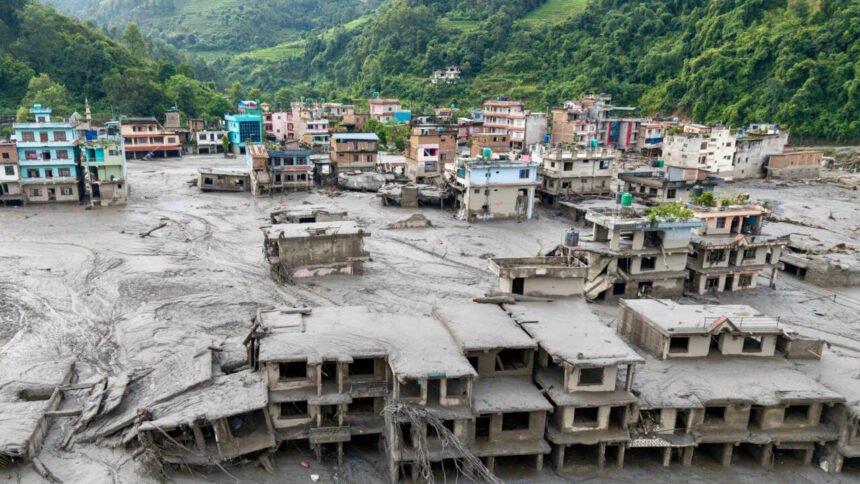
Just as Nepal continues to deal with the devastating aftermath of the catastrophic flash floods near its border with Tibet, authorities are now facing another serious concern.
A fresh high alert has been issued in vulnerable areas, with residents being moved to safer locations amid fears that another wave of flooding could hit communities downstream. The warning comes after the massive glacier-collapse disaster that has already caused widespread destruction across the Himalayan region.
Why Has Nepal Issued Another Warning?
The latest concern is linked to a newly formed barrier lake and unstable water accumulation in the disaster-hit region near the Nepal-Tibet border.
According to recent reports, debris from the glacier collapse blocked parts of the river system, creating a large accumulation of water upstream. The lake has been overflowing, raising fears that a sudden breach or further collapse could send another powerful surge of water and debris towards downstream settlements.
Authorities are therefore closely monitoring the situation and taking precautionary measures by moving people away from areas considered to be at risk.
Residents Shifted to Safer Locations
The renewed warning has prompted evacuation efforts in vulnerable communities. Officials are trying to prevent another tragedy by ensuring that residents living along potentially affected river corridors are moved to safer places before the situation worsens.
Rescue teams are already stretched by the massive disaster that struck the region earlier this week, with hundreds of people confirmed dead and more than a thousand still reported missing across Nepal and the affected border region.
Nepal Still Reeling From Catastrophic Glacier Collapse
The original disaster began after a major glacial and rock collapse triggered a destructive surge of mud, water and debris through mountain river systems.
Entire settlements and vital infrastructure were damaged, while roads and bridges were swept away. Scientists and disaster agencies are continuing to study the exact sequence of events, but the incident has once again highlighted the growing vulnerability of Himalayan communities to glacier-related disasters.
Rescue Operations Continue as Danger Remains
Search and rescue operations are continuing in some of the most severely affected areas. Helicopters and emergency teams are being used to reach stranded survivors and isolated communities, but damaged infrastructure and difficult mountain terrain have made the operation extremely challenging.
The possibility of another flood has added a new layer of urgency to the operation. Authorities are now dealing with two challenges at the same time—searching for those already missing and protecting communities from a potential second disaster.
Situation Remains Highly Uncertain
The exact scale of the new threat is still being assessed, and authorities are continuing to monitor water levels and the stability of the debris barrier.
For residents in Nepal’s vulnerable Himalayan valleys, the nightmare is far from over. The region is already recovering from one of its worst recent disasters, and the fresh evacuation warning shows just how quickly the situation can change in this fragile mountain landscape.