

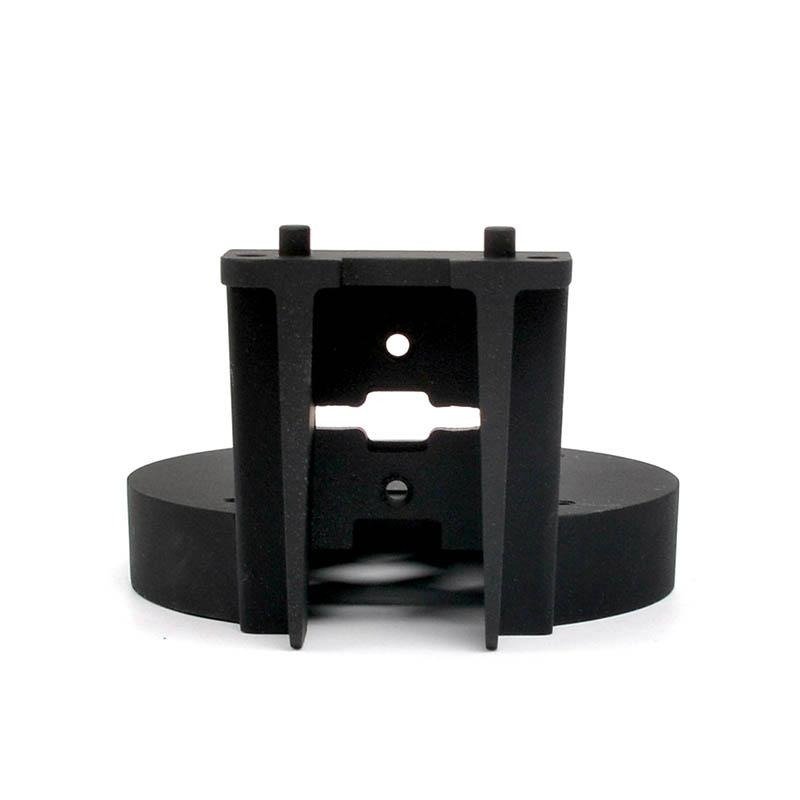
Machine-axis count is easy to turn into a marketing number, but engineers care about a more practical outcome: how efficiently the cutter can reach the required surfaces. CSMolding provides 3-, 4-, and 5-axis CNC milling, which makes process selection a geometry question. A flat fixture plate may be ideal three-axis work, while a component with angled bores, compound faces, or related features around several sides can justify additional rotary motion.
Use three axes when the part lets you
Three-axis milling is highly capable for planar faces, pockets, slots, hole patterns, and many prismatic housings. If features can be reached from the top and perhaps one or two simple re-fixtures, the process can be straightforward to program, fixture, and inspect. Keeping related features on common faces also improves manufacturability.
Add rotation to reduce re-fixturing
With a fourth axis, the workpiece can index or rotate. This is valuable for holes, flats, slots, or contours distributed around a part. Instead of removing the component and establishing a new setup for each side, the machine can reference those orientations in one controlled arrangement. That can reduce handling and preserve relationships between features.
Five-axis machines go further by allowing the tool and part to approach one another from changing angles. Complex contours, undercut-like access challenges, and closely related angled surfaces may become much more manageable. Shorter tool reach is another benefit when the machine can tilt toward a difficult surface.
Complexity should earn its place
Not every part benefits from five-axis work. If the geometry is fundamentally two-and-a-half-dimensional, using an elaborate strategy may add programming effort without reducing meaningful risk. On the other hand, forcing a truly multi-sided component through many simple setups can create alignment and fixture burdens.
The design team can make this choice easier by providing functional context. Mark the features that must relate tightly, identify cosmetic surfaces that should avoid clamps, and explain which angled geometry is nonnegotiable. CSMolding’s milling service supports prototypes and low-volume production, so the optimal route can also change with quantity. A clever one-off setup may be right for a prototype; a repeatable indexed fixture may win for a batch. Choose axis count for access, relationship control, and repeatability–not simply because more axes sound more precise.