



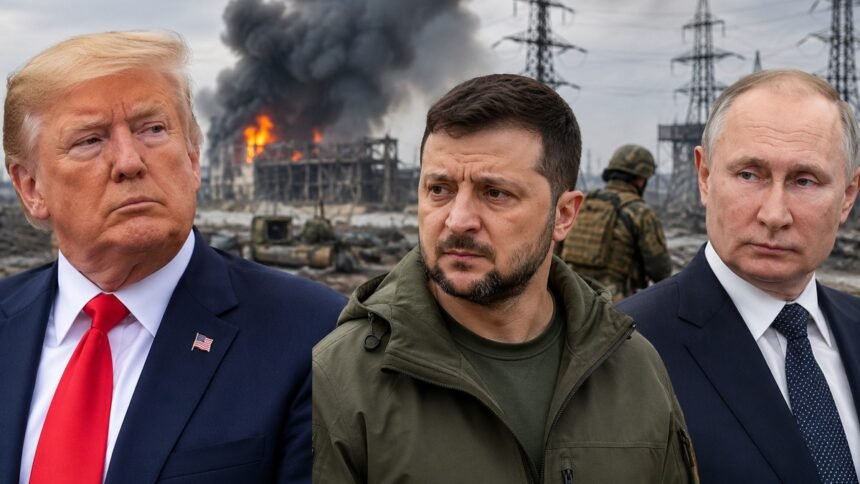
Kyiv [Ukraine], October 13: US President Donald Trump has insisted that Russia and Ukraine have agreed to stop attacks on each other’s energy infrastructure, even as Ukrainian President Volodymyr Zelenskyy reports fresh Russian strikes on energy facilities. The conflicting statements have raised questions about whether the proposed energy ceasefire is actually being implemented, with both sides continuing to face the consequences of the ongoing war.
Trump made the announcement after declaring that the two countries had agreed to halt attacks on energy infrastructure. However, the arrangement has not been clearly confirmed by both Moscow and Kyiv, leaving uncertainty over its terms, implementation and enforcement.
Zelenskyy said Russian forces had attacked six energy facilities in Ukraine since the announcement. He also reported that 33 people had been wounded across the country. According to the Ukrainian president, the continued attacks indicate that Russia is not complying with the proposed pause in strikes.
Trump, responding to questions about the reported attacks, said there had been violations on both sides and that he would need to examine the details. He urged Zelenskyy and Russian President Vladimir Putin to come together to end the war, describing the conflict as a disaster.
The proposed ceasefire comes amid continued attacks on energy infrastructure, which has become a significant part of the wider conflict. Damage to power facilities, gas installations and other critical infrastructure can disrupt electricity supplies, heating and essential services, particularly as Ukraine prepares for colder weather.
Zelenskyy has said Ukraine is prepared to support an energy ceasefire and indicated that Kyiv had not attacked Russian oil refineries during the latest overnight period. He has also called for clear guarantees to ensure that any agreement is respected by both sides. Ukraine has maintained that it is ready to halt attacks on Russian energy targets if Moscow stops striking Ukrainian facilities.
Russia, however, has signalled that it does not want a temporary ceasefire and continues to pursue its stated military objectives. Russian Foreign Minister Sergey Lavrov has indicated that Moscow intends to continue its campaign, while Kremlin officials have said they favour a longer-term settlement rather than a limited pause in fighting.
The announcement has also created uncertainty among Ukraine’s European allies. Several European leaders have questioned whether an effective energy ceasefire is in place, while the European Union has announced a further expansion of sanctions against Russia. The additional measures target individuals and entities connected to Russia’s military-industrial sector, as European governments continue efforts to maintain economic pressure on Moscow.
The dispute is unfolding alongside disagreements over US policy towards Russia, including Washington’s temporary easing of restrictions on Russian diesel exports. The decision has drawn criticism from Ukrainian officials and European allies, who argue that easing restrictions could provide Moscow with additional revenue while the war continues.
Energy prices and fuel costs have also become part of the diplomatic debate. Trump has linked the conflict to rising fuel prices in the United States and has urged both leaders to end the fighting. However, the continuing strikes and the lack of a clearly established ceasefire framework suggest that significant obstacles remain.
For Ukraine, attacks on energy infrastructure threaten essential services and add pressure on communities already affected by years of war. For Russia and its international partners, the disagreement over the ceasefire highlights the difficulty of securing even a limited arrangement without clear terms and a mechanism to verify compliance.
The situation remains uncertain, with no clearly established implementation framework publicly confirmed by both sides. Whether the proposed energy ceasefire can prevent further attacks will depend on the actions of Moscow and Kyiv, as well as any concrete steps taken by Washington to clarify the agreement and encourage compliance. For now, reports of fresh strikes continue to cast doubt on the prospects for an immediate reduction in attacks on critical energy facilities.