


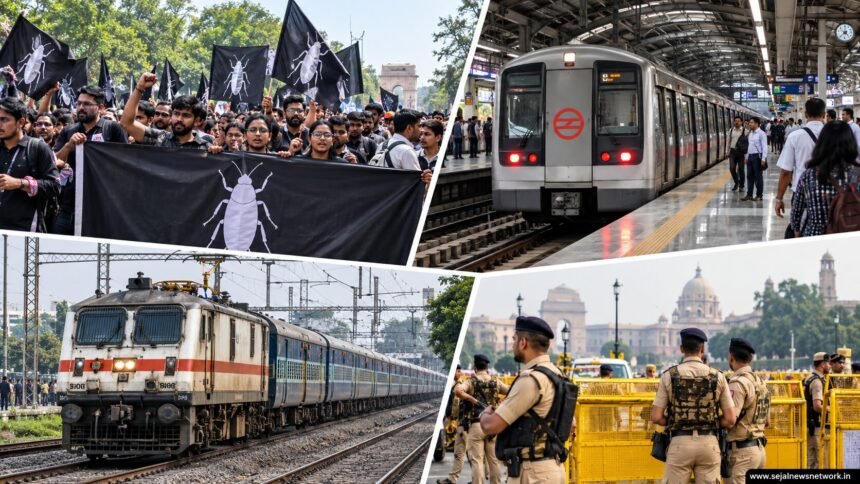
New Delhi [India], October 9: The national capital is preparing for heightened security and major transport restrictions ahead of a proposed protest by the Cockroach Janta Party (CJP) at Jantar Mantar on Saturday, October 10. The demonstration is intended to demand the resignation of Chief Election Commissioner Gyanesh Kumar.
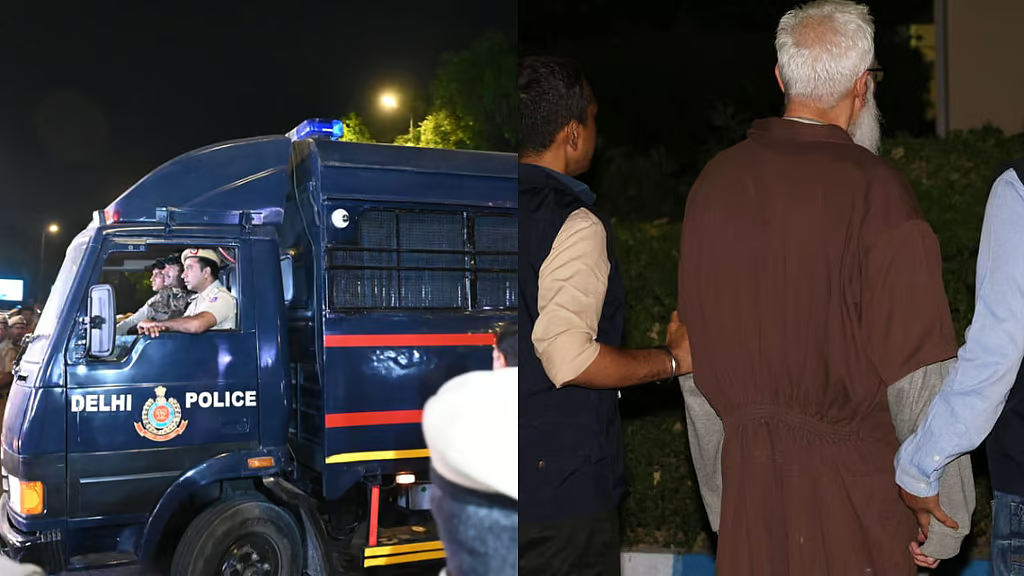
Delhi Police has denied permission for the protest, citing the absence of the mandatory 10-day advance notice and alleged violations of guidelines during an earlier demonstration. Authorities have announced extensive security arrangements, restrictions at 57 Metro stations and the cancellation of several trains scheduled to arrive in Delhi.
Delhi Metro Restrictions at 57 Stations
The Delhi Metro Rail Corporation has been asked to close the entry and exit gates of 57 Metro stations from 9 pm on Friday, October 9, until the situation returns to normal. Metro trains passing through affected stations may also operate at reduced frequencies.
The restrictions cover important stations and interchange points across the capital, potentially affecting daily commuters, office workers and visitors.
Major stations identified for restrictions include Rajiv Chowk, Central Secretariat, New Delhi, Patel Chowk, Janpath, Mandi House, Barakhamba Road, ITO, Delhi Gate, Khan Market, Lok Kalyan Marg, Udyog Bhawan, Kashmere Gate, Hauz Khas, INA and Lajpat Nagar.
Passengers travelling through central Delhi and other affected areas have been advised to check the latest Metro service updates before starting their journeys. The duration of the restrictions will depend on the security situation.
Several Trains Cancelled Ahead of the Protest
Railway services have also been affected by the security arrangements. Several trains scheduled to arrive at New Delhi Railway Station and Hazrat Nizamuddin Railway Station between 4 am and 2 pm on Saturday, October 10, have been cancelled.
The affected services have been cancelled at their originating stations. The move is intended to manage the arrival of large crowds and reduce the possibility of protest-related disruptions around major railway terminals.
Passengers travelling to Delhi during the specified period should verify their train status before leaving home and check whether their service has been cancelled or rescheduled.
Around 23,000 Security Personnel on Alert
Security preparations have been intensified across the capital, with around 23,000 Central Armed Police Forces personnel being made available for deployment, according to reports.
The Union Home Ministry has approved the deployment of 221 CAPF companies between October 8 and October 12, alongside additional security arrangements involving Delhi Police.
Authorities are preparing multi-layered barricades and surveillance arrangements, including CCTV monitoring and facial-recognition systems at selected locations. Police units are also coordinating with neighbouring states, including Uttar Pradesh and Haryana, to monitor movement towards Delhi.
Railway stations, bus terminals and sensitive locations are expected to remain under heightened surveillance. The arrangements are aimed at preventing unauthorised gatherings and maintaining public order.
Why Has Delhi Police Denied Permission?
Delhi Police has stated that permission for the CJP demonstration was rejected because the organisers did not provide the required 10-day advance intimation. Officials have also cited alleged non-compliance with directions during a previous protest.
Section 163 of the Bharatiya Nagarik Suraksha Sanhita (BNSS) is in force in parts of central Delhi. The restrictions empower authorities to issue directions aimed at preventing potential threats to public order, and police have warned that violations may invite legal action.
The proposed demonstration has drawn attention because of its demand for the resignation of Chief Election Commissioner Gyanesh Kumar. The protest is connected to concerns raised by critics over revisions to electoral rolls. The Election Commission’s position and the wider dispute over voter-list verification remain part of the ongoing public debate.
Supreme Court Hears Challenge to Restrictions
The restrictions on transport and public movement have also come under judicial scrutiny. A plea challenging the measures was brought before the Supreme Court on Friday.
During the hearing, concerns were raised about the impact of Metro station closures and train cancellations on the public’s ability to move around the capital. The proceedings highlighted the need to consider the right to peaceful protest alongside the responsibility of authorities to maintain public order.
The broader issue is how security measures can be implemented without imposing unnecessary hardship on ordinary commuters and visitors.
What Delhi Residents and Travellers Should Know
With the proposed demonstration scheduled for Saturday, residents and visitors should plan their journeys carefully. Those using the Metro should check whether their boarding or interchange stations are affected, while railway passengers should confirm their train status before travelling.
Commuters heading towards central Delhi should also allow additional travel time because of possible barricading, traffic diversions and increased security checks.
The situation remains subject to changes based on police assessments and further official directions. Travellers should follow the latest advisories from the relevant transport authorities.
Delhi is now preparing for an unusually extensive security operation ahead of the CJP protest. With Metro restrictions, train cancellations and thousands of security personnel on alert, the arrangements are expected to affect movement across several parts of the capital on October 10.