



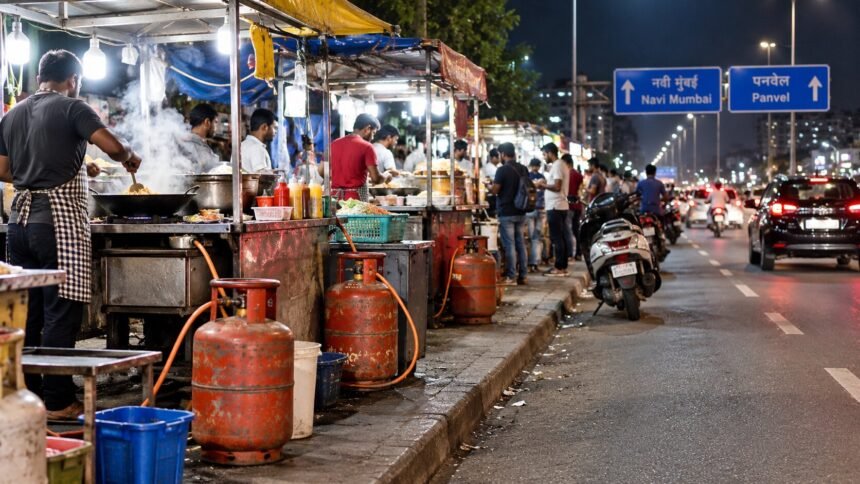
Mumbai [India], October 9: The growing number of late-night food stalls along major roads and highways in Navi Mumbai has raised concerns over road safety, traffic congestion and the use of cooking gas cylinders in open spaces. From Digha to Uran, roadside Chinese food stalls, bhurji-pav carts and ice-cream vendors are reportedly operating at several busy junctions, creating challenges for commuters and local authorities.
While late-night food stalls cater to residents, workers and travellers looking for food after regular business hours, their location along busy roads has become a concern. Stalls occupying road edges and important junctions can obstruct traffic, while customers parking their vehicles along the roadside may increase the risk of accidents.
Open Gas Cylinders Raise Fire and Explosion Risks
One of the major concerns is the use of LPG cylinders for cooking at roadside stalls. Operating cooking equipment in congested areas, especially close to moving vehicles, can create serious safety risks if cylinders, regulators, pipes or burners are not handled properly.
A cylinder explosion was reportedly recorded at a Chinese food stall in Rabale a few months ago. Although a major loss of life was avoided in that incident, the continued operation of roadside food stalls has renewed questions about safety inspections and enforcement.
Authorities need to ensure that food vendors follow applicable fire-safety requirements and operate only in permitted locations. Regular inspections and appropriate action against unsafe setups are important to reduce the possibility of a serious incident.
Traffic Congestion and Illegal Parking Add to the Problem
The presence of food stalls on highways and major roads can narrow the space available for moving traffic. When customers stop their cars or two-wheelers close to a stall, other motorists may be forced to slow down or manoeuvre around parked vehicles.
Such conditions can be particularly risky at night, when visibility may be reduced and vehicles may approach at higher speeds. Busy junctions and highway stretches require clear access for emergency vehicles, public transport and regular commuters.
Residents are concerned that repeated roadside obstructions could increase the chances of collisions, particularly where stalls operate late into the night without adequate parking arrangements.
Questions Over Civic and Police Enforcement
The report also raises questions about the effectiveness of action taken by local police and municipal anti-encroachment teams. Although inspections and removals are reportedly conducted from time to time, some stalls are alleged to resume operations within hours.
This has prompted calls for more consistent enforcement rather than occasional action. Authorities may need to identify unauthorised stalls, verify the permissions required for their operations and take action where vendors violate applicable rules.
The focus is not only on removing roadside encroachments but also on ensuring that food businesses can operate in locations where they do not endanger customers or other road users.
Residents Seek Stronger Night-Time Monitoring
Residents have also expressed concerns about crowding, irregular parking and the reported presence of intoxicated individuals or antisocial elements around some late-night food-stall locations. These concerns have added a law-and-order dimension to the issue.
Increased night patrols, better monitoring of busy junctions and coordinated action between municipal authorities, police and relevant safety agencies could help address the situation. Clear guidelines for permitted vending locations and appropriate parking arrangements would also help reduce conflicts between food vendors and commuters.
Need for a Balance Between Business and Public Safety
Late-night food stalls provide convenient food options and livelihoods for small vendors. However, commercial activity on highways and major roads must not compromise public safety.
The concerns in Navi Mumbai underline the need for a consistent approach that distinguishes permitted vending areas from dangerous or unauthorised roadside operations. Regular inspections, enforcement of safety rules and suitable designated vending spaces could help protect both vendors and the public.
As the city continues to expand, residents will be looking to the authorities for effective measures to keep major roads clear, reduce accident risks and ensure that the use of gas cylinders at roadside food stalls does not lead to a preventable tragedy.