



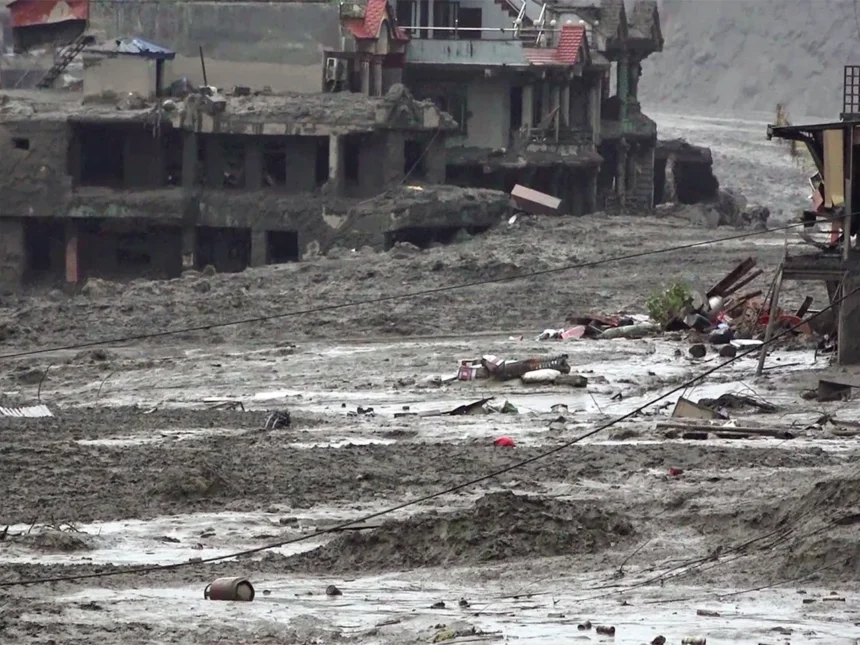
A catastrophic flash flood disaster in Nepal has turned into one of the region’s worst natural tragedies in recent years. At least 469 people have been confirmed dead, while nearly 1,000 others remain missing following a massive glacier-related collapse near the Nepal-China border.
The disaster has devastated communities, damaged major infrastructure and left rescue teams racing against time. Authorities are now facing another major concern—a newly formed lake in the disaster zone that could trigger further flooding.
How Did the Disaster Begin?
The devastating chain of events began when a massive collapse involving ice, rock and debris struck the Himalayan region near the Nepal-Tibet border.
The collapse triggered a powerful surge of water, mud and boulders that rushed downstream, destroying settlements, roads, bridges and other infrastructure. Scientists are still examining the exact sequence of events, but the disaster has highlighted the growing dangers posed by unstable glaciers and mountain environments.
Rescue Operations Continue Across the Region
Rescue teams have been deployed across some of the worst-hit areas as authorities search for survivors trapped or stranded by the floods.
Thousands of people have already been rescued, but the operation remains extremely challenging due to damaged roads, unstable terrain and the remote Himalayan location. Foreign tourists, pilgrims, workers and local residents are among those reported missing. People from more than 30 countries are believed to have been affected by the disaster.
Fresh Flood Threat From Newly Formed Lake
Even as search and rescue operations continue, authorities have warned of a possible new wave of flooding.
A lake formed after debris blocked water flow in the affected region has begun overflowing, raising fears that a breach could send another powerful surge downstream. The growing threat has complicated rescue efforts, with teams closely monitoring water levels and the stability of the natural barrier.
Foreign Nationals Among Those Missing
The tragedy has also affected a large number of international visitors and workers.
Reports indicate that hundreds of foreigners are among those still unaccounted for, including people from India and several other countries. The affected region is popular with tourists and pilgrims travelling through the Himalayan belt, making the disaster an international humanitarian concern.
Why Are Himalayan Glacier Disasters Becoming a Major Concern?
Scientists have warned that rising temperatures can make high-altitude mountain regions increasingly unstable. Changes in snowmelt, rainfall, freezing and thawing patterns can weaken glaciers and surrounding rock formations, increasing the risk of massive landslides and sudden floods.
While investigators continue to determine the precise cause of this disaster, experts say the event underlines the growing risks facing communities living near fragile Himalayan environments.
A Region Still on High Alert
With rescue teams continuing their search and the threat of additional flooding still present, authorities in Nepal and the neighbouring Tibetan region remain on high alert.
The casualty figures may continue to change as rescuers reach isolated areas and authorities receive more information from the disaster zone. For now, the focus remains on saving survivors, locating the missing and preventing another catastrophic flood.