



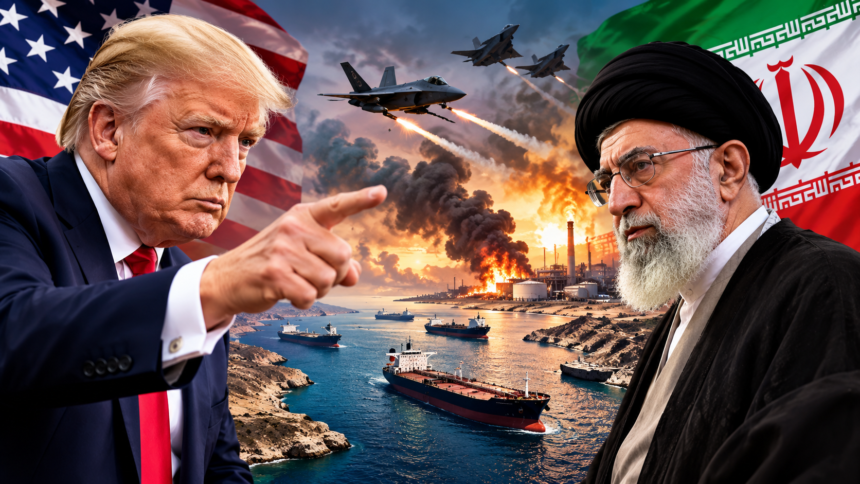
Washington [US], September 26: US President Donald Trump has reportedly rejected Iran’s proposal for a seven-day ceasefire and reopening of the Strait of Hormuz, while a report by The Wall Street Journal, citing US officials, said Trump has told aides that renewed US bombing of Iran could resume after the November midterm elections. The report comes as Tehran continues to seek a diplomatic route to halt the seven-month-old conflict.
Iranian Foreign Minister Abbas Araghchi presented the proposal at the United Nations in New York. Under Tehran’s plan, a seven-day countdown would begin after Washington accepts the proposal, with fighting across the region paused and the Strait of Hormuz reopened at the end of that period. Iran also offered to resume broader discussions with the United States, potentially including talks over its nuclear programme.
The proposal includes several conditions for Washington. Iran wants the United States to lift its naval blockade on Iranian ports, release frozen Iranian funds and waive sanctions affecting Iranian oil exports. In return, Tehran would reopen the strategically important Strait of Hormuz and agree to a wider pause in hostilities, including fighting involving Lebanon.
The Strait of Hormuz is particularly important because it is one of the world’s major energy-shipping routes. Continued disruption there has affected oil flows and added pressure to global energy markets. Iran’s proposal therefore seeks to connect the reopening of the waterway with a broader ceasefire and renewed diplomatic negotiations.
According to the Wall Street Journal report, Trump remains privately doubtful that Iran would satisfy US demands, particularly on the nuclear issue. The report said he had indicated to aides that another bombing campaign could be likely after the November congressional elections. However, the scale and timing of any possible future military action remain uncertain, and Reuters said it could not immediately independently confirm the Journal’s report about Trump’s rejection of the proposal.
There is also an important difference between the positions of Washington and Tehran on Iran’s nuclear programme. Trump has repeatedly said Iran must not be allowed to obtain a nuclear weapon. Meanwhile, a senior Iranian official told Reuters that Tehran would not agree to concessions on its nuclear programme, including uranium enrichment or shipping enriched uranium out of the country, even if Washington accepts the proposed framework.
Iranian President Masoud Pezeshkian has also indicated that Tehran is prepared to discuss nuclear inspections. Speaking in New York, he said Iran could reach an agreement regarding access for UN nuclear inspectors as part of negotiations. Tehran has also expressed a preference for reaching an understanding before the US midterm elections in November.
Despite the reported rejection, diplomatic channels have not completely closed. A US official previously described discussions taking place through mediators as “positive and constructive,” while Iran has continued communicating with Washington through intermediaries, including Qatar. This means the reported position described by the Journal does not necessarily represent a final end to diplomatic efforts.
The conflict has also expanded beyond the immediate US-Iran confrontation. Iran and allied groups have carried out attacks involving Gulf states, while Houthi forces in Yemen have targeted Saudi interests. Iranian-aligned groups in Iraq have also been accused of attacks affecting regional energy infrastructure, while Hezbollah remains involved in fighting with Israel in Lebanon.
The security situation has prompted closer coordination among several countries in the region. Saudi Arabia, Pakistan and Turkey have held discussions on defence cooperation, while officials have been reviewing security arrangements amid the continuing attacks and threats to regional shipping.
The humanitarian consequences are also becoming increasingly significant. The United Nations children’s agency has reported rising acute malnutrition among children in Yemen as violence continues to affect the region. Meanwhile, the disruption around the Strait of Hormuz has created wider economic concerns because of its importance to international energy transportation.
For now, Iran is awaiting an official response from Washington to its seven-day proposal. The reported rejection by Trump, if maintained, would leave the diplomatic process facing another major obstacle. At the same time, the continuing back-channel discussions suggest that negotiations have not necessarily ended. The coming weeks, particularly the period leading up to the November 2026 US midterm elections, will be closely watched for any change in the positions of Washington and Tehran.

