



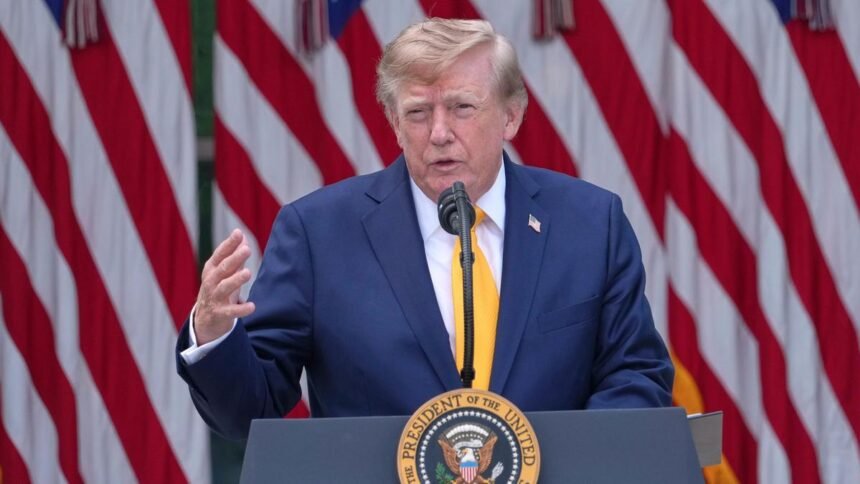
US President Donald Trump has signed an executive order directing federal agencies to refer to Lake Ontario as “Lake America” in official US documents, maps and databases. The move has opened a fresh front in the increasingly bitter relationship between the United States and Canada.
Lake Ontario is one of North America’s five Great Lakes and is shared by the two countries. The executive order changes the name for US federal use, but it does not require Canada, international organisations or mapmakers outside the US to adopt “Lake America.”
Trump Makes the Name Change Official
Trump had earlier floated the idea of renaming the lake, but the proposal became official on August 27, 2026, when he signed the executive order.
The announcement comes shortly after trade talks between Washington and Ottawa broke down, with both countries blaming each other for the failure of negotiations. The naming dispute has now become another symbolic flashpoint in the wider US-Canada confrontation.
Canada Rejects the Move
Canadian Prime Minister Mark Carney has rejected the name change, stressing the historical significance of the name Lake Ontario, which he said dates back more than 400 years. Canadian authorities have made it clear that the lake will continue to be known as Lake Ontario in Canada.
The name itself has deep Indigenous roots, adding another layer to the controversy surrounding the decision.
The Trade War Behind the Latest Dispute
The unusual naming battle comes amid growing economic tensions between the two neighbours. Canada has announced retaliatory tariffs on hundreds of US products after the latest round of trade negotiations collapsed. The tariffs are set to affect billions of dollars in cross-border trade.
Against this backdrop, Trump’s decision to rename a shared Great Lake is being seen as another sign of how sharply relations between Washington and Ottawa have deteriorated.
What Does the Executive Order Actually Change?
The order primarily affects how the US federal government refers to the lake. Federal agencies and official US records are expected to use “Lake America” under the new directive.
However, Trump cannot unilaterally force Canada to change its official name for the lake, nor can the order compel international bodies or the rest of the world to abandon the name Lake Ontario.
For now, the lake has become more than just a geographical landmark—it has turned into the latest symbol of the deepening political and trade dispute between two of North America’s closest neighbours.