



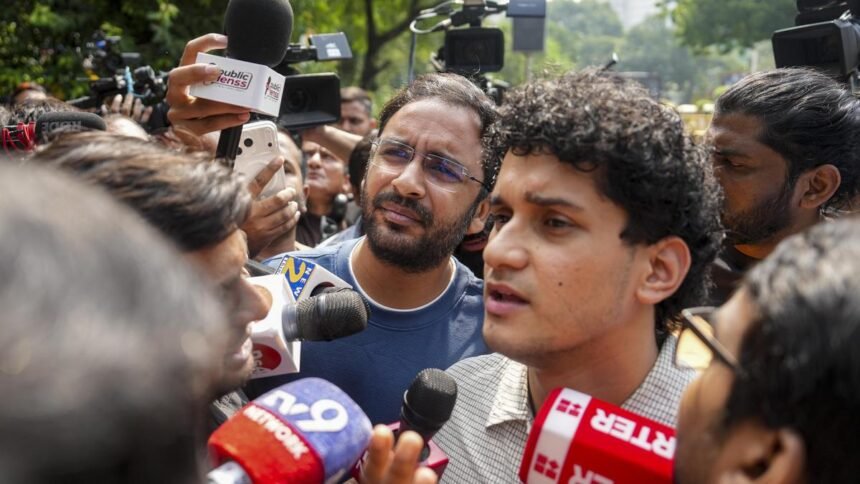
New Delhi [India], October 13: Protests demanding the resignation of Chief Election Commissioner Gyanesh Kumar have intensified in Delhi, with Opposition parties stepping up their campaign over alleged irregularities in the Special Intensive Revision (SIR) of electoral rolls. The INDIA bloc held a major march to the Supreme Court on Monday, bringing together senior leaders from several Opposition parties and placing the dispute over voter lists and the Election Commission at the centre of national political debate.
The march was led by Congress leader Rahul Gandhi and included Congress president Mallikarjun Kharge, Trinamool Congress chief Mamata Banerjee, Samajwadi Party leader Akhilesh Yadav and other INDIA bloc representatives. Protesters moved through central Delhi towards the Supreme Court, demanding accountability over the revision of electoral rolls and calling for Gyanesh Kumar to step down.
The Opposition has alleged that the SIR exercise could result in eligible voters being removed from electoral rolls and has called for an independent investigation into the process. The Election Commission’s role and the conduct of the revision exercise have become key points of contention, with Opposition leaders seeking greater transparency and safeguards to prevent wrongful deletions.
After the march, Opposition leaders submitted a joint petition to the Supreme Court challenging aspects of the SIR exercise and raising concerns about the functioning of the Election Commission. The legal move marks an attempt to shift the dispute from street demonstrations to judicial scrutiny. The petition names the Election Commission and senior election officials among the respondents, while the issues raised are now subject to legal proceedings.
The protests have also triggered a debate over public order and the right to demonstrate. Delhi Police registered two FIRs related to Monday’s march, citing the absence of permission and alleged damage to barricades. Police action during earlier demonstrations has also become a subject of concern, with protesters and civil society groups raising allegations of detentions and restrictions on movement.
The Supreme Court is separately considering petitions concerning the treatment of protesters, restrictions on transport and allegations of illegal detention during the demonstrations. Earlier directions addressed the need to maintain movement and essential public services while ensuring law and order. The proceedings are expected to examine the concerns raised by petitioners and the responses of the authorities.
The demonstrations follow several days of protests in the capital involving political groups, activists and student organisations. The campaign against Gyanesh Kumar has extended beyond a single party, with different groups raising objections to the electoral roll revision process and demanding action from the Election Commission. The scale of participation has increased pressure on political leaders and authorities to address the allegations through established procedures.
Meanwhile, the political response is continuing beyond Delhi. Trinamool Congress organisers have announced plans for a protest march in Kolkata against the Centre and the Election Commission, reflecting how the dispute has spread to other parts of the country. Opposition leaders have indicated that they intend to continue raising the issue until their concerns receive a response.
The Election Commission’s handling of electoral rolls is central to the dispute, but the allegations made by political parties remain contested and must be assessed through evidence and the relevant legal process. The outcome of the Supreme Court proceedings and any official response to the concerns raised could shape the next stage of the confrontation between the Opposition and the election authorities.
With legal proceedings under way and further political demonstrations being planned, the controversy surrounding Gyanesh Kumar and the SIR exercise is likely to remain a major issue in Indian politics. The immediate focus is on the Supreme Court’s consideration of the petitions, the authorities’ response to the allegations and whether the dispute can be addressed through a transparent process that protects eligible voters and public order.