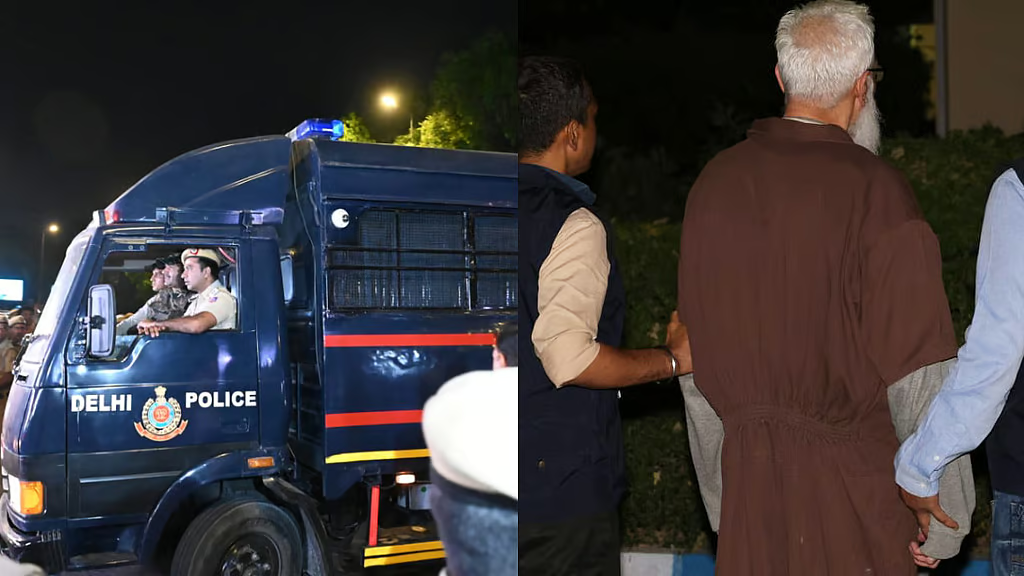



New Delhi [India], September 28: A recent alleged gangrape of a 17-year-old girl at a Delhi Development Authority (DDA) park has brought renewed attention to security conditions in the Capital’s parks, with an on-ground assessment finding dark stretches, limited CCTV coverage, weak access controls and gaps in night-time surveillance at several locations.
The teenager was allegedly sexually assaulted by three men at a DDA park in southeast Delhi after the accused allegedly posed as police officers. According to Delhi Police, the men used police terminology and threats to convince the girl and her 17-year-old male friend that they were dealing with law enforcement personnel. The three accused were arrested, and a case was registered under the POCSO Act and relevant provisions of the Bharatiya Nyaya Sanhita.
The incident has prompted closer scrutiny of parks and isolated green spaces across Delhi. The Indian Express visited six parks and forested areas and reported that security conditions varied significantly, with some locations having guards and functioning lights but little or no CCTV coverage inside the premises. Other parks had inadequate lighting, limited security staff or access points that could be difficult to control after closing hours.
At the large DDA park where the teenager was allegedly assaulted, the security concerns were particularly visible. The park covers roughly 142 acres and has 29 gates, according to the DDA. Police had earlier said that the portion where the alleged incident took place had no CCTV coverage, while several cameras installed at entry gates were non-functional. Reports also found that a guard cabin near one of the gates did not have electricity and that large portions of the park were poorly lit after sunset.
The size of the park has also emerged as a challenge for surveillance. Security personnel said the interconnected sections and multiple access points make it difficult for a small number of guards or police teams to monitor the entire area. Police have increased their presence following the incident, including night patrols through different sections of the park.
The issue, however, is not limited to one location. At a park near North Campus, guards told The Indian Express that CCTV cameras covered some gates but did not monitor the interior. Students were reportedly still able to enter after closing hours by climbing over walls. In other areas, visitors raised concerns about dark corners, drug use and harassment, particularly after evening hours.
Maidangarhi Forest Park in South Delhi also illustrates the difference between lighting and overall security. Lights were installed in the area following heightened attention after the Shraddha Walkar case, but visitors and people working nearby told the newspaper that the presence of guards and CCTV remained limited. A police post located close to the park has not completely addressed concerns about activity in isolated portions of the area.
Following the recent case, Delhi Police Commissioner Anurag Kumar directed officers in all 15 districts to identify poorly lit stretches, non-functional CCTV cameras, broken walls and other security deficiencies in parks, roads and isolated areas. Police teams have also been asked to coordinate with civic agencies whenever such deficiencies are identified.
The police have also revived bicycle patrols in several parks. District-level officers have instructed station house officers to deploy personnel on bicycles along with foot patrols during morning and evening hours. The aim is to increase police visibility inside parks, where patrol vehicles may not be able to access every internal pathway.
A separate assessment by Delhi Police has identified specific infrastructure requirements at several vulnerable locations. In the Hauz Rani forest area, police have sought 32 CCTV cameras under the Safe City project. Officials said only around 70 per cent of the lights in that area were functioning and also sought tree pruning because dense foliage was blocking existing lighting.
At Hauz Rani Idgah, locally known as Jamun Wala Park, police found that there were neither CCTV cameras nor adequate lighting. At Bonta Park in North Delhi, three CCTV cameras were installed and police requested five more, while additional lighting was also sought. At Qudsia Bagh, police sought seven additional cameras and 10 more lights, along with improvements to lighting along walking tracks.
The Delhi Police assessment also highlighted a broader issue: installing infrastructure alone may not be enough if cameras are not functional, lights are not maintained, trees block illumination or people continue to remain inside parks after closing time.
The DDA has said that lighting installations at the large South Delhi park are inspected regularly and that it is assessing security manpower and deployment requirements in view of the park’s size and multiple access points. The agency has also said coordination with Delhi Police is being strengthened to improve patrolling and response to suspicious activity or emergencies.
The recent developments have therefore shifted attention from the individual crime case to the wider question of how Delhi’s parks are monitored after dark. Police and civic agencies are now examining CCTV coverage, lighting, boundary walls, tree growth, entry controls and patrol arrangements across several vulnerable locations.
The investigation into the alleged gangrape remains separate from the broader security review. The three accused in that case have been arrested, while the police response to the incident has expanded to include a city-wide assessment of safety gaps in parks and isolated public spaces.