



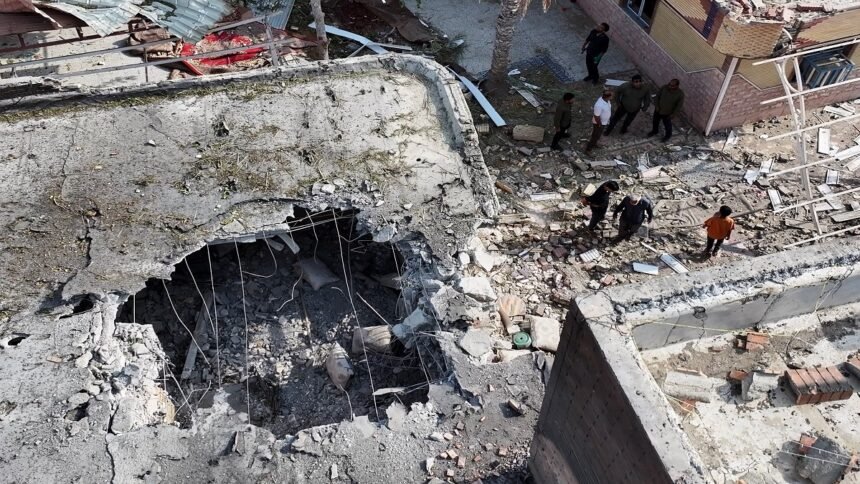
Tehran: Tensions between the United States and Iran have sharply escalated after Iran said 18 people were killed and 108 wounded in overnight US strikes across the country. Tehran has condemned the attacks and accused Washington of violating Iran’s sovereignty, while Iranian forces launched retaliatory attacks against US-linked military positions across the region.
The latest exchange marks another dangerous escalation in the ongoing conflict and has raised fresh concerns about civilian casualties, regional security and the future of shipping through the strategically important Strait of Hormuz.
Iran Reports 18 Deaths and 108 Injured
Iranian Health Minister Mohammad-Reza Zafarghandi announced that 18 people had been killed and another 108 wounded in the latest overnight US attacks.
The statement, published through the Iranian president’s office, did not provide a detailed breakdown of where the deaths and injuries occurred. Iranian officials said the strikes affected multiple locations in the country.
Iran’s Foreign Ministry strongly condemned the US military action, describing it as an act of aggression and accusing Washington of violating Iran’s national sovereignty and territorial integrity.
The ministry said the strikes had hit several locations, including what Iranian authorities described as civilian areas and service infrastructure, causing deaths, injuries and property damage.
US Says It Targeted Iranian Military Positions
The United States has presented a different account of the operation.
US Central Command said American forces had successfully completed a wave of strikes against Iranian military targets.
According to CENTCOM, the action followed what Washington described as recent attempted attacks by Iran’s Islamic Revolutionary Guard Corps against commercial shipping in the Strait of Hormuz and US service members operating in the region.
The Strait of Hormuz has remained at the centre of the latest confrontation because of its importance to international shipping and global energy supplies.
Wedding Gathering Reportedly Hit
Among the most serious allegations surrounding the latest strikes is an incident in southern Iran where a US strike reportedly hit a house during a wedding gathering.
Iranian authorities and the Iranian Red Crescent said civilians were killed and dozens injured in the incident near the Strait of Hormuz. Reports said four people were killed at the wedding and 67 were wounded.
The US military has said it does not deliberately target civilians and is reviewing reports surrounding the incident.
The reported wedding strike has added to international concern over the civilian toll of the renewed fighting.
Iran Launches Retaliatory Attacks
Following the US strikes, Iran launched retaliatory attacks against American military assets and bases in several countries.
Iran’s Revolutionary Guard said it targeted US positions in Bahrain, Jordan, Kuwait, Iraq and the United Arab Emirates. Iranian attacks reportedly involved missiles and drones.
The attacks triggered heightened security measures across several Gulf countries, with air-defence systems activated in response to incoming threats.
The developments have increased fears that the conflict could spread beyond the immediate US-Iran battlefield and involve more countries across the Middle East.
Strait of Hormuz Becomes a Major Flashpoint
The latest escalation is particularly significant because of the situation around the Strait of Hormuz, one of the world’s most important maritime chokepoints.
The United States has cited Iranian threats to commercial shipping as one of the reasons behind its latest military operation. Iran, meanwhile, has repeatedly warned that it will defend its interests in the strategic waterway.
Any prolonged disruption in the strait could have consequences for international energy markets because a significant share of global oil shipments traditionally passes through the waterway.
The renewed military activity has therefore raised concerns well beyond the Middle East, with governments and markets closely watching developments around shipping and energy supplies.
International Concern Grows
The latest violence has prompted renewed calls for restraint as the civilian death toll continues to attract international attention.
UN Secretary-General António Guterres has condemned attacks affecting civilians and called for an immediate halt to the escalation, urging the parties to return to diplomacy.
The latest confrontation follows a period of relative calm between Washington and Tehran, but stalled diplomatic efforts and disputes surrounding the Strait of Hormuz have once again pushed the two sides into direct military confrontation.
The immediate concern is whether the latest exchange will remain limited or develop into a wider regional conflict.
Trump has already indicated that the US remains prepared to carry out further strikes against Iran if necessary. Tehran, meanwhile, has vowed to defend its territory and has demonstrated through its retaliatory attacks that it is willing to target US-linked positions beyond Iran’s borders.
With civilian casualties rising, US and Iranian forces exchanging attacks and the Strait of Hormuz remaining under pressure, the coming days could prove crucial for determining whether the region moves towards another major escalation or a renewed diplomatic effort.